

Augmented Reality (AR) devices are no longer just a sci-fi fantasy; they’re reshaping how we interact with the world around us. Imagine blending the digital and physical realms seamlessly—like having a virtual assistant that’s not just a voice in your pocket but a hologram helping you find your keys. It’s like magic, but with a lot more tech and a lot fewer rabbits.
Overview of Augmented Reality Technology
Augmented Reality (AR) technology enhances the real world by overlaying digital information onto physical environments. Users interact with this integrated blend through devices such as AR glasses and smartphones. These devices utilize advanced sensors and cameras to capture the surroundings. Additionally, AR algorithms analyze data in real time, enabling responsive interactions with digital content.
Gaming stands as one of the earliest and most popular applications of AR. For example, popular games like Pokémon GO have captivated millions by merging digital creatures with real-world settings. Industries like education also benefit from AR through immersive learning experiences. In this context, students can explore complex concepts visually, making subjects more engaging.
Another crucial area is retail. AR technology allows consumers to try products virtually. Apps enabling virtual fitting rooms exemplify this trend, improving shopping experiences and reducing return rates. The healthcare sector also adopts AR, offering innovative solutions such as guided surgeries and anatomy visualization.
Collaboration tools leverage AR for remote communication, enhancing connectivity across distances. Teams can visualize projects and interact with 3D models in shared spaces, even while physically apart. This advancement supports increased productivity and creativity.
The ongoing development of AR technology suggests a strong future. Industry leaders invest heavily in AR research. Predictions indicate significant growth in AR market value in the coming years, driven by continued innovation and adoption across various sectors. Real-world applications expand daily, showcasing the vast potential of augmented reality.
Factors to Consider When Choosing AR Devices
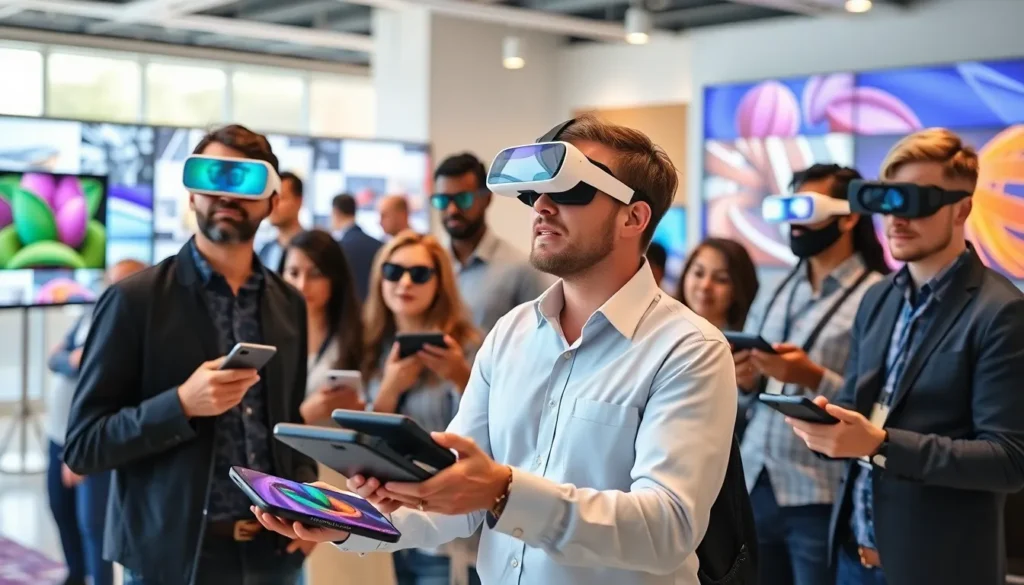
Selecting the right AR device involves evaluating several key factors that affect overall user experience. Understanding these elements helps in making an informed decision.
Display Quality
Display quality plays a critical role in user satisfaction. High-resolution screens enhance clarity, making digital information appear more lifelike. Devices with at least 1080p resolution provide crisp visuals. Brightness also matters; a brightness level of 500 nits or more ensures visibility in various lighting conditions. Color accuracy affects realism, so devices that offer a wide color gamut showcase vibrant images. Consider refresh rates as well; higher rates reduce motion blur, creating smoother experiences during fast-paced actions.
Field of View
Field of view significantly impacts immersion. A broader field of view allows users to see more of the augmented environment. Look for devices offering at least 90 degrees; this ensures an engaging experience without requiring constant head movements. A wider view reduces the sensation of tunnel vision, improving user comfort. Additionally, devices should combine field of view with display quality to create a seamless integration of digital and physical elements. Testing various field-of-view options can reveal personal preferences based on the intended application.
Comfort and Ergonomics
Comfort and ergonomics significantly affect prolonged usage. Devices must fit securely without causing strain. Weighing less than 500 grams tends to enhance comfort during extended sessions. Adjustable features, including straps and nose pads, improve fit for diverse users. Consider battery life too; longer-lasting batteries promote enjoyment without frequent interruptions. Users appreciate devices that maintain balance and ergonomic design, as these factors increase usability over time. Prioritize comfort to ensure a pleasurable augmented reality experience.
Top AR Devices in 2023
Augmented Reality devices continue to evolve, offering innovative solutions across various sectors. The following selections represent some of the best AR technology available this year.
Device 1: Microsoft HoloLens 2
Microsoft HoloLens 2 stands out for its advanced mixed reality capabilities. Equipped with a more comfortable design, users can wear it for extended periods without discomfort. Enhanced vision clarity results from improved resolution and a wider field of view, creating an immersive experience. It suits industries including healthcare and manufacturing, enabling 3D visualization of complex data. The device’s hand-tracking feature allows intuitive interaction with virtual objects, thereby enhancing productivity.
Device 2: Magic Leap 1
Magic Leap 1 impresses with its lightweight design and spatial computing features. It offers excellent integration of digital content into the real world, making it ideal for creative professionals. Users report an engaging experience with high-quality visuals that enhance storytelling and presentations. This device provides a unique platform for developers to create new applications using its open software architecture. Magic Leap continues to focus on the entertainment and gaming sectors, driving innovative AR applications forward.
Device 3: Google Glass Enterprise Edition 2
Google Glass Enterprise Edition 2 caters primarily to enterprise use, offering a hands-free experience for professionals. Its lightweight design enhances usability in various work environments, from manufacturing to logistics. The device features a high-resolution display that clearly overlays information in real time. Equipped with advanced voice recognition, it allows seamless interaction without manual input. Users benefit from its robust battery life, ensuring extended usage in busy settings.
Device 4: Vuzix Blade
Vuzix Blade provides a versatile AR solution with its sleek design and practical features. This device includes a built-in camera for capturing images and video, promoting immersive storytelling. Users appreciate the heads-up display that enables easy access to information while remaining aware of their surroundings. With support for various applications, it suits industries such as retail, logistics, and healthcare. The Vuzix Blade emphasizes productivity, ensuring users can perform tasks efficiently while leveraging augmented reality.
The Future of AR Devices
Advancements in AR technology signal a transformative era ahead. Investment in research and development continues to surge, driving innovative applications across various sectors. Consumer engagement enhances as AR devices become more integrated into daily life.
In education, educators leverage AR for immersive learning experiences that captivate students. Gamified lessons and interactive content foster engagement and retention. Healthcare professionals increasingly adopt AR for training simulations, surgical guidance, and patient diagnostics. Enhanced accuracy and reduced risks lead to improved patient outcomes.
Retail benefits significantly from AR’s ability to revolutionize shopping experiences. Virtual try-ons provide customers with the opportunity to visualize products before purchasing. Major retailers integrate AR features into apps, making the shopping process seamless and enjoyable.
Manufacturing industries also capitalize on AR through real-time data visualization. Worker efficiency increases as AR provides hands-free access to crucial information. The integration of AR in remote collaboration sets a new standard for teamwork and project visualization, allowing teams to work more effectively across distances.
Future predictions indicate market growth, driven by user demands and technological innovations. Reports suggest the AR market could exceed $198 billion by 2025, highlighting its expanded uses and necessity. Companies focusing on user comfort and device ergonomics stand to benefit, as users prioritize prolonged usage without discomfort.
With the continuous evolution of software and hardware, AR devices will become more accessible and versatile. As technology advances, the boundary between potential and reality continues to blur, paving the way for a rich, augmented reality future.
The landscape of Augmented Reality devices is rapidly evolving and transforming how individuals interact with their environments. As advancements continue to emerge AR technology is set to enhance various sectors from education to healthcare and retail. The devices showcased represent just a glimpse into the potential of AR to revolutionize everyday experiences.
With significant investments and innovations on the horizon the future looks bright for AR. Users can expect more accessible and versatile solutions that will further blur the lines between digital and physical realities. As AR becomes more integrated into daily life it promises to enrich experiences and drive productivity across numerous industries.

