
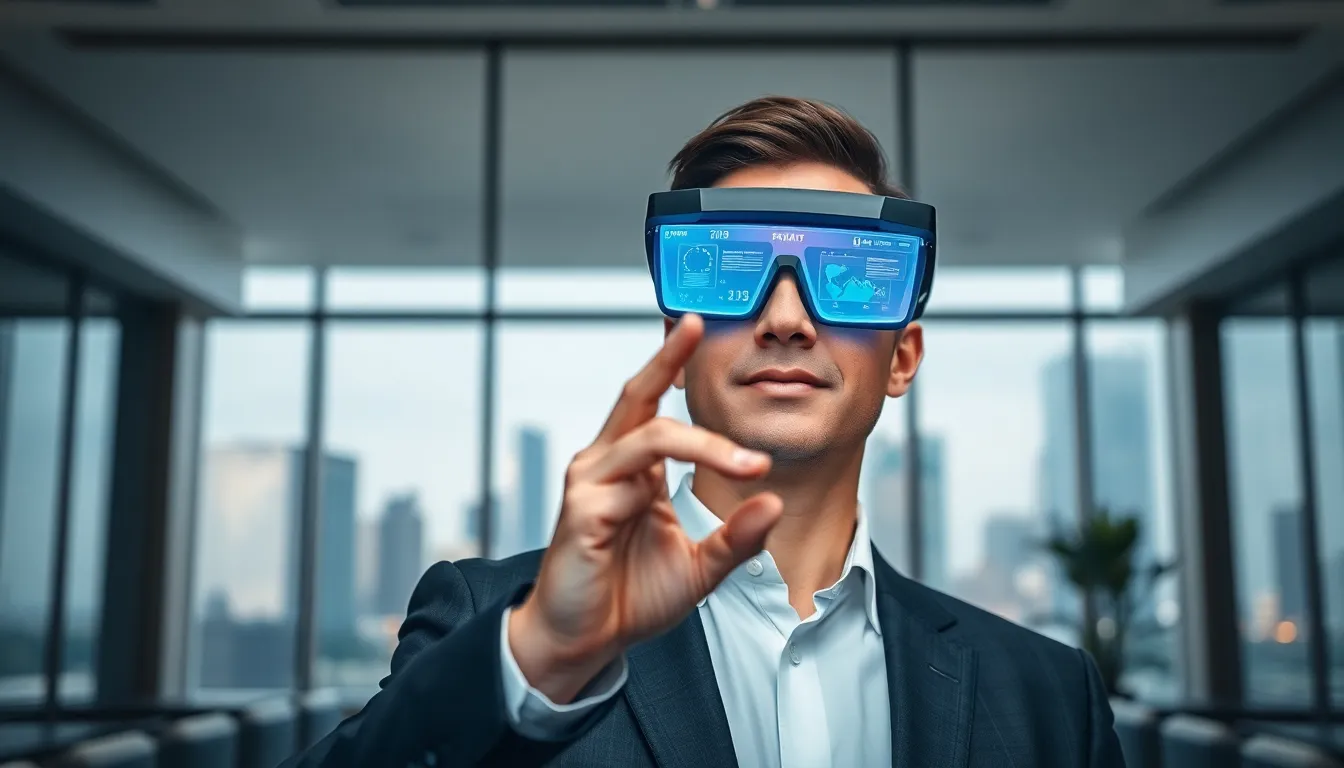
Imagine putting on a pair of glasses and, instead of just seeing the world around you, having digital information seamlessly inserted right into your view. Sounds like the stuff of sci-fi, doesn’t it? Well, welcome to reality, augmented reality, that is. This amazing technology is transforming how we interact with the world, blurring the lines between digital and physical realms. In this text, we’ll dive deep into how augmented reality glasses work, exploring the technology, components, and astonishing applications, all while keeping you entertained. So, grab your virtual binoculars as we explore this exciting frontier.
Understanding Augmented Reality Technology

At its core, augmented reality (AR) enhances the user’s perception of reality by overlaying digital information onto the real world. This innovative technology utilizes different devices, and among the coolest of them are AR glasses. AR can be compared to a digital lens that enriches your environment: think of it as adding a layer of context to what you see: no more boring coffee cups when your favorite barista’s secret brew recipe pops up next to it.
The magic behind AR lies in its ability to understand the physical world. It involves sensors, cameras, and software that analyze the environment, allowing the glasses to display relevant information. How does it know what’s happening around? It works by recognizing objects through computer vision, which can identify features in the environment and decide what digital content to display. This recognition creates a seamless interaction between the user and the world around them.
The Components of Augmented Reality Glasses
To comprehend how augmented reality glasses operate, one must understand their various components. These devices may seem like simple eyewear, but they house a variety of sophisticated technologies. Here are the key components:
- Display: The lenses or screens provide users with the augmented visuals. They might be transparent displays or projection systems, displaying images directly onto the lenses.
- Sensors: A combination of accelerometers, gyroscopes, and magnetometers detect the user’s movement and orientation, ensuring that the overlaid content aligns accurately with the real world.
- Camera: This component captures live video from the user’s perspective, allowing the software to interpret the environment.
- Microprocessor: Just like your computer, AR glasses have a brain. This processor drives the software, manages data, and ensures a smooth user experience.
- Microphone and Speakers: These components enable voice commands and audio feedback, immersing the user even further in the augmented experience.
- Connectivity Options: Wi-Fi, Bluetooth, and sometimes cellular connectivity allow AR glasses to fetch and display real-time data from the internet.
Each of these components works together to create an immersive experience that blends the digital and physical worlds.
How Augmented Reality Glasses Generate Visual Overlays
Generating visual overlays is where the real fun begins. When a user dons AR glasses, the process kicks off immediately. The camera feeds live video to the processor, and in real-time, the software analyzes the input.
Using computer vision techniques, it identifies objects, surfaces, and even people, creating a map of the environment. This exciting interaction moves beyond just recognizing objects: it establishes key points that allow the augmented visuals to be anchored correctly in place. For instance, a virtual navigation arrow may appear on your imagined walk to the nearest coffee shop, directing you along your way.
Once the software has identified the environment, the microprocessor generates digital elements, like graphics, text, and animations, that fit perfectly within that contextual framework. The display then projects these elements onto the lenses, allowing users to see both the real world and the digital augmentation simultaneously. Talk about seeing the world through new eyes. This dynamic interaction also adjusts for user movement, ensuring that the overlays remain aligned no matter how you twist or turn.
User Interaction with Augmented Reality Glasses
Using augmented reality glasses goes beyond just looking and seeing: user interaction is a vital aspect of the experience. Wondering how you can control what appears in your view? Users mainly interact with AR glasses through three key methods:
- Gestures: Many devices are equipped with gesture recognition technology, allowing users to make natural hand movements to navigate through menus and select options. Imagine swiping through photos by simply swiping your hand in mid-air.
- Voice Commands: Speaking directly to the glasses enables hands-free operation. Many AR glasses now feature voice recognition, helping users quickly launch applications or request information with just their voice. So, don’t worry about looking silly in public: just talk to the glasses like they’re your best friend.
- Touchpad and Buttons: Some models might feature touch-sensitive areas or physical buttons on the frame. These traditional methods still have their charm, especially for users who prefer tactile interaction.
By combining these methods, augmented reality glasses create a highly intuitive experience that places users at the helm of their digital explorations.
Applications of Augmented Reality Glasses
The applications for augmented reality glasses span various fields, and the possibilities grow daily. Here are some exciting areas where AR glasses are making waves:
- Healthcare: Surgeons are using AR glasses during operations to overlay vital patient information, enhancing precision during complex procedures. Imagine having essential stats visible while focusing on intricate surgery, it’s a game-changer.
- Education: AR glasses create interactive learning sessions where students can visualize complex subjects like chemistry or physics. Picture students watching a 3D model of the solar system while learning about planetary orbits.
- Gaming: AR transforms gaming by merging real-world environments with virtual experiences. Gamers can explore their living rooms as magical lands, where playful creatures live among them.
- Retail: Shopping becomes an engaging experience when virtual try-ons are integrated into the customer journey. AR glasses can help visualize how that trendy jacket fits without ever needing to step into a changing room.
- Manufacturing and Maintenance: Workers can access step-by-step assembly instructions right in their field of vision. This minimizes errors and enhances efficiency as they operate complex machinery.
These examples merely scratch the surface of AR’s potential, illustrating tangible benefits across various sectors.
The Future of Augmented Reality Glasses
What does the future hold for augmented reality glasses? As technology continues to advance, expect even more innovation and integration in daily life. The trajectory points towards slimmer designs, enhanced performances, and improved battery life. In a world where everyone is trying to balance style and functionality, AR glasses are likely to become sleeker and more aesthetically appealing.
AI integration is also on the horizon, where smarter recognition capabilities could enable real-time translations of signs or menus. Imagine traveling to a foreign country and wearing glasses that translate everything you see instantly, reducing language barriers significantly.
Besides, social media and communication apps are showing interest in AR features. Interactive experiences could soon become the norm, with users sharing augmented visions of their lives. While we’re not quite at the level of flying cars yet, AR glasses may become the next accessory everyone wishes they had.
In short, the future for augmented reality glasses is not just bright, it’s dazzling. As they evolve, they promise to revolutionize how people connect with information, experiences, and each other.

