

Imagine opening a book and watching its characters spring to life, dancing off the pages and right into your living room. Sounds like magic, right? Welcome to the world of Augmented Reality (AR) for books, where reading no longer means just flipping pages but diving into an immersive universe that engages all senses. If you’ve ever wished your novels could come with a bit of pizzazz, you’re in for a treat. Let’s explore how AR is redefining the literary landscape with a sprinkle of fun and a whole lot of knowledge.
What Is Augmented Reality?
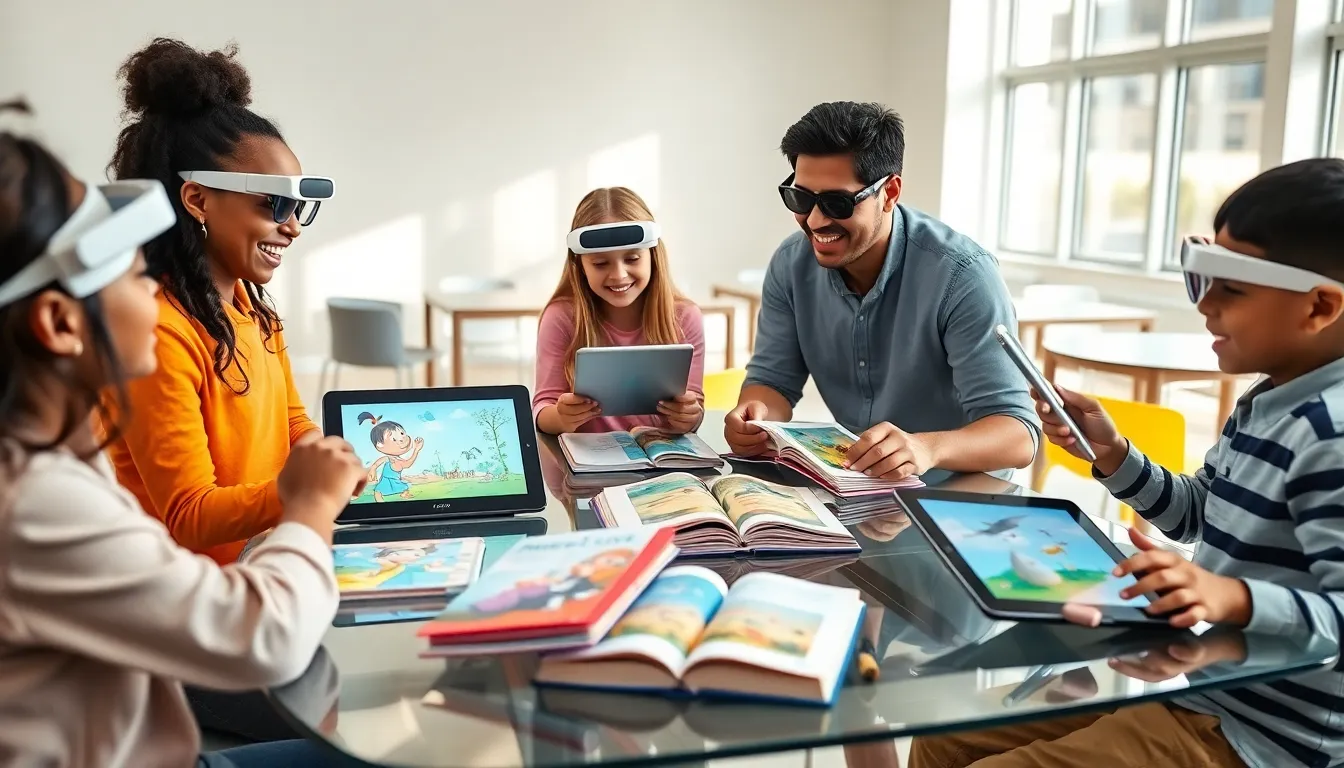
Augmented Reality, shortened to AR, is a tech-savvy layer added to our real-world environment. Imagine wearing glasses or using your phone to overlay digital information onto physical items. Not confined to gaming or tech industries, AR weaves its magic into everyday life, bringing richer experiences to mundane tasks. In simpler terms, AR makes the ordinary extraordinary. It bridges the gap between the digital world and our physical surroundings by enhancing what we see through the addition of interactive content. No longer a futuristic fantasy, AR is now accessible, engaging, and transforming how we perceive the world around us.
The Evolution of Augmented Reality in Literature
The journey of AR in literature has been nothing short of revolutionary. From pop-up books to e-readers, each innovation has nudged us closer to hyper-real experiences. Early experiments with AR in books were like dipping a toe into a pool, it was engaging but still felt a bit awkward. Today, major players like Apple and Google are developing AR applications that allow users to scan pages and unveil a whole new layer of storytelling. These advances propel literature into an immersive, interactive age where readers become active participants in the narrative, not just passive observers.
Benefits of Augmented Reality in Books
The benefits of implementing AR in books are as plentiful as a well-stocked library. For starters, AR dramatically increases engagement. Readers don’t just read: they interact, learning through vivid examples that pop right off the page. This makes complex subjects far more approachable and fun, particularly for younger audiences who may find traditional formats unexciting. Also, AR fosters inclusivity by offering audio features for those with visual impairments or providing translations in multiple languages at the touch of a screen.
Also, this technology caters to various learning styles, allowing information to resonate with visual learners through imagery and audio. The interactivity inherent in AR also encourages readers to stay focused and excited about their explorations, coupling storytelling with playfulness and adventure.
Popular Augmented Reality Books
In the landscape of AR literature, several standout titles have captured the imaginations of readers worldwide.
How Augmented Reality Is Enhancing the Reading Experience
Take the classic tale “Where’s Waldo?” but now visualized through AR technology. As readers search for Waldo, they don’t merely scan static images: intricate animations unfold, providing settings that evolve with every turn of the page. This is reading like one has never experienced.
Educational Applications of Augmented Reality
Textbooks have also jumped into the AR pool, with manufacturers like Pearson offering dynamic math and science books. Imagine a biology textbook where students can see 3D models of the human body, click to explore organs, and even visualize process functions. Such interactive features empower students, making education far more engaging and memorable.
Challenges and Limitations of Augmented Reality in Publishing
Even though the enchanting allure of AR in books, challenges permeate the landscape. A primary hurdle lies in accessibility: not every reader possesses the necessary devices to use AR features. Publishers must confront development costs, ensuring the technology aligns with industry standards while remaining affordable for consumers. Also, there’s a risk of overshadowing the text itself: too much interactivity might distract from the core narrative. Finding that delicate balance between engagement and substance becomes paramount in moving forward.
The Future of Augmented Reality in the Book Industry
Looking ahead, the prospects for AR in the book industry appear thrilling. As technology continues to develop, we can anticipate more sophisticated applications that blend storytelling with additional functionalities. Imagine experiencing a character’s background story by interacting without leaving the pages. Publishers are already experimenting with hybrid formats that unite traditional storytelling and new-age AR.
With promises of expanded interactivity and improved user experiences, AR could soon redefine not just how stories are told but also how they’re consumed. The integration of AI algorithms in AR applications might even customize experiences based on user behavior, presenting tailored content that resonates more deeply with individual readers.

