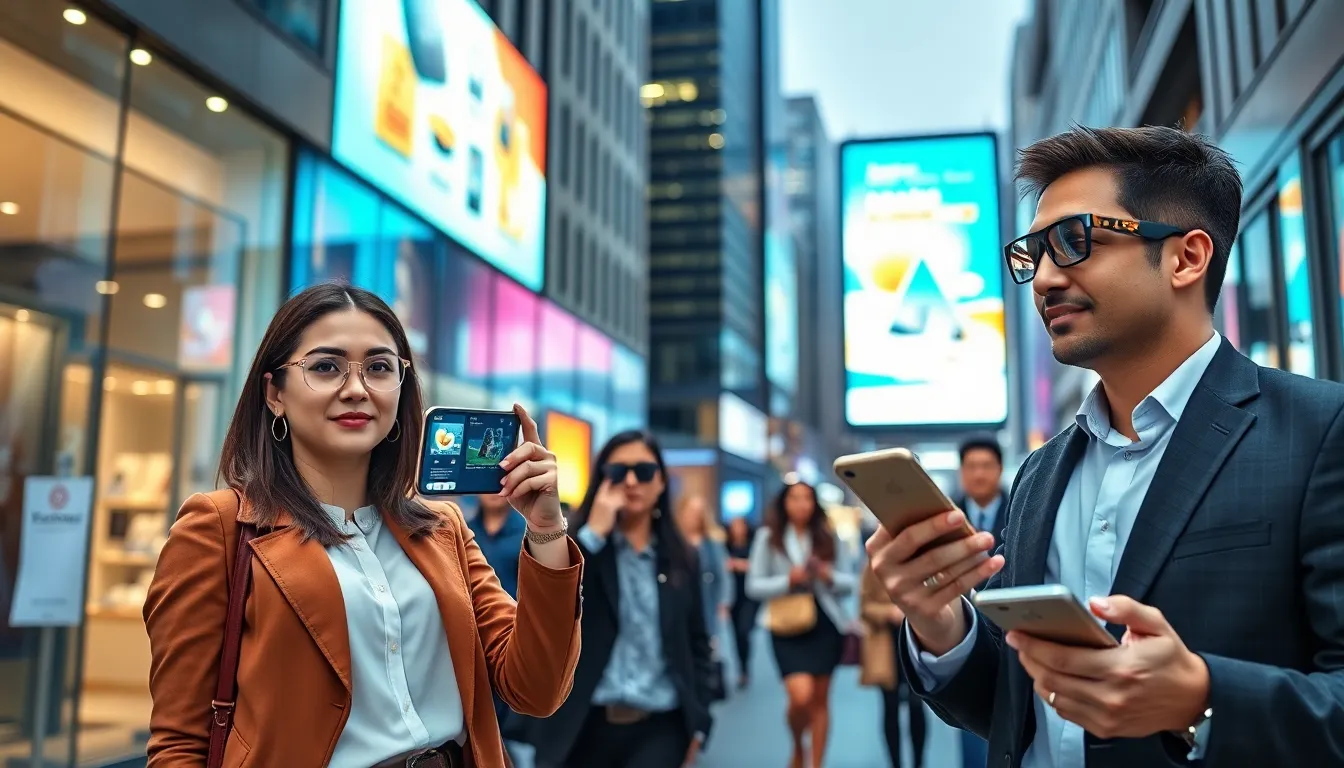
Imagine walking down the street, your phone in hand, when suddenly your screen overlays real-time information about the shops around you. Welcome to the captivating realm of augmented reality (AR). Far from just a buzzword, AR is embedding itself in our everyday lives, turning science fiction into reality. Curious about how this tech miracle unfolds across various sectors? Let’s jump into the many applications of augmented reality that are changing our lives for the better, and maybe even adding a sprinkle of fun along the way.
Education

Augmented reality is reshaping the educational landscape, transforming how students learn and engage with information. Imagine students dissecting frogs, virtually, of course. With AR, they can visualize intricate anatomical details without the need for a real frog. Tools like Google Expeditions allow teachers to take students on virtual field trips to explore ancient civilizations or dive deep into marine biology.
Also, interactive learning apps like Anatomy 4D enable users to unlock 3D models of the human body, leading to a deeper understanding of complex concepts. As a result, AR not only makes learning more engaging but also promotes critical thinking and retention. Students are not just passive recipients of information: they become active participants in their education.
In essence, AR in education serves as a bridge between theoretical knowledge and practical application, lighting the spark of curiosity in young minds.
Healthcare
In the healthcare sector, augmented reality is proving to be a game changer. Surgeons now use AR to visualize complex internal structures during operations. By overlaying 3D images onto a patient’s anatomy, doctors can navigate more effectively, significantly improving surgical outcomes. For instance, AR systems can highlight blood vessels and critical structures in real-time, ensuring precision that could be the difference between success and failure.
Also, training for medical students has never been more engaging. With AR, they can step into simulated environments that mimic real-world situations without the inherent risks involved. This hands-on approach cultivates confidence in students, preparing them for the challenges they will face in real settings.
Besides, applications like AccuVein are making routine procedures, such as drawing blood, easier by projecting a map of veins directly onto the patient’s skin. This tech not only enhances accuracy but also reduces patient discomfort. Overall, AR is bridging gaps in healthcare, bringing education and practice into harmony.
Retail and E-Commerce
When it comes to shopping, augmented reality is paving the way to a more immersive experience. Consider a scenario where customers can virtually try on clothes without stepping into a fitting room. Retail brands like Sephora are leading the charge by offering AR-enabled apps that allow users to apply makeup virtually. This means no more guessing if that shade of lipstick suits you: just point your camera and test it out.
Also, furniture retail has adopted AR to help customers visualize their products in their own spaces. IKEA’s app empowers consumers to see how a couch fits in their living room, eliminating the uncertainties that often accompany purchases. With AR, the shopper gains confidence, which translates to improved sales and customer satisfaction.
As retailers embrace this technology, they are creating personalized experiences that enhance consumer engagement. No longer is shopping just a task: it becomes an interactive adventure.
Entertainment and Gaming
It’s no surprise that augmented reality is making waves in the entertainment and gaming sectors. The almighty Pokémon GO catapulted AR into mainstream awareness, inviting players to explore their surroundings while catching virtual creatures. This blend of the real and virtual worlds sparked a global phenomenon, encouraging physical activity and social interaction.
Also, AR applications are now being used to create immersive gaming experiences that go beyond the screen. Games like Ingress invite players to engage with their real-world environment, blending storytelling and location-based challenges. The result? A sense of community and connection that traditional gaming struggles to achieve.
Besides, AR has infiltrated other forms of entertainment, such as concerts and live events. Imagine pointing your phone at a stage and seeing added effects unfold, enhancing your overall experience. As AR continues to evolve, so too will its role in shaping how we play and engage with storytelling.
Real Estate and Architecture
In the realms of real estate and architecture, augmented reality is proving to be invaluable. Potential buyers can now take virtual tours of properties without leaving the comfort of their homes. Using AR goggles or mobile apps, clients can visualize unbuilt spaces, making decisions with enhanced confidence. This innovative approach saves both time and resources for buyers and agents alike.
Architects are also leveraging AR to create realistic visualizations of their designs. By overlaying 3D models onto real-world locations, clients can experience a project before it even breaks ground. This clarity fosters constructive feedback, ensuring that designs meet expectations effectively.
With the help of AR, the future of real estate and architecture promises to be more accessible and user-friendly, transforming visions into tangible experiences.
Tourism and Navigation
When exploring a new city, augmented reality simplifies navigation and enriches the experience. Imagine pointing your smartphone at a historic landmark and instantly receiving information about its history or nearby attractions. Apps like Google Maps are incorporating AR features to enhance real-time navigation, making it easier for tourists to find their way.
Also, AR can bring life to dull city tours. For instance, museums are adopting AR guides that overlay stories and interactive content over exhibits, transforming a simple viewing into a captivating experience. This innovation not only makes history engaging but also encourages visitors to explore more deeply.
As the tourism industry embraces AR, travelers are likely to discover richer and more immersive experiences, making each destination not just a place to visit but a story to be experienced.
Future Trends and Innovations
The future of augmented reality is bright, promising exciting innovations across multiple sectors. As technology advances, we can expect AR to become even more seamless and integrated into our daily lives. A buzzworth trend is the development of AR glasses, which may replace smartphones as the primary interface. Imagine looking at someone and immediately accessing their social media profiles or viewing important information about them.
Besides, industries are exploring AR’s potential for remote collaboration. With tools like Microsoft’s HoloLens, teams can work together virtually, regardless of physical location. This capability is bound to reshape how businesses operate, breaking geographical barriers.
As AR continues to unfold, the possibilities are endless. From practical applications to imaginative experiences, the tech is set to become an integral part of how we perceive and interact with the world around us.