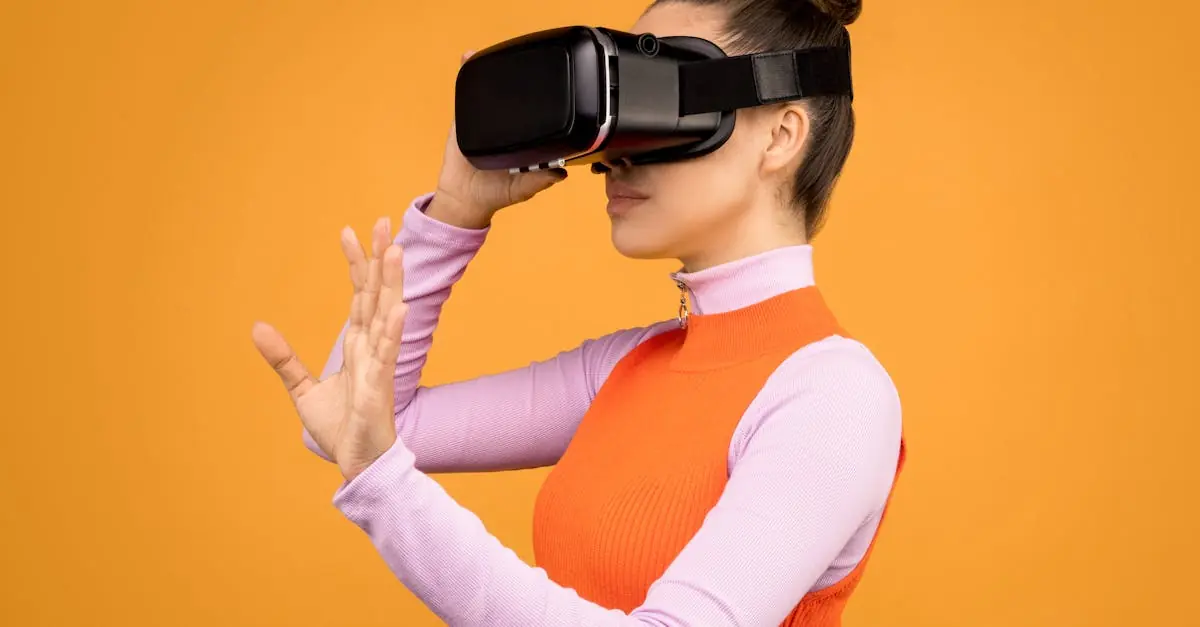
Imagine stepping into a world where your living room transforms into a dragon’s lair or your backyard becomes a bustling alien marketplace. Augmented reality games are doing just that, blending the real and virtual worlds in ways that make even the most mundane Tuesday feel like an epic adventure. With a simple tap on a screen, players find themselves dodging imaginary fireballs or hunting for treasure right under their noses.
Table of Contents
ToggleOverview of Augmented Reality Games
Augmented reality games blend real-world environments with virtual elements, enhancing player engagement. Through the use of smartphones or AR glasses, users interact with digital characters and objects seamlessly merged into their surroundings. Popular titles include Pokémon GO and Ingress, which encourage players to explore their neighborhoods to capture virtual creatures or complete missions.
Interactivity lies at the core of augmented reality games. Players can socialize with others, participate in challenges, and collaborate on quests, all while enjoying immersive gameplay. These experiences foster a sense of community, as players often share tips and discoveries with each other.
Game developers continuously innovate within this space, introducing new mechanics and features. For instance, location-based gameplay requires players to venture outside, creating a balance between outdoor activity and digital entertainment. This aspect draws a broader audience, appealing to casual gamers and those seeking physical engagement.
The technology behind augmented reality games relies on GPS, computer vision, and depth tracking. GPS allows for the precise placement of virtual elements in real-world locations. Computer vision and tracking technologies ensure smooth interactions with the environment, enhancing the overall experience.
Educational applications further demonstrate the versatility of augmented reality. Some games integrate learning experiences, teaching players about local history or environmental conservation while they play. This adds an educational dimension, making these games valuable tools for engagement.
Evolving rapidly, augmented reality games continue to capture imaginations globally. Continued advancements in technology promise to enhance gameplay, ensuring fresh and engaging experiences for all participants. As these games grow in popularity, their potential to transform leisure activities remains expansive.
Key Features of Augmented Reality Games
Augmented reality games offer unique experiences that blend digital and physical worlds. Players interact with the environment, heightening engagement and enjoyment.
Interactive Gameplay
Gameplay in AR titles emphasizes player interaction and participation. Users experience challenges that require physical movement, enhancing the overall excitement. Collaborations occur frequently, allowing players to team up on quests or compete against each other. Events often take place in real locations, promoting socialization within communities. Regular updates introduce new content, keeping gameplay fresh and inviting exploration. Players enjoy personalized experiences through custom character designs and skill sets.
Real-World Integration
Integration of the real world forms the core of AR gaming. Game mechanics utilize GPS technology to create immersive environments around existing locations. Virtual characters appear in everyday settings, allowing players to discover new places. Education features often accompany gameplay, providing insights into local history or ecosystems. Recognition of real-world obstacles creates a sense of challenge and adventure. The seamless blend of reality and fantasy transforms casual outings into thrilling experiences. AR games pave the way for innovative entertainment and exploration.
Popular Augmented Reality Games
Numerous augmented reality games captivate players with their immersive experiences. Below are some standout titles in the AR gaming landscape.
Pokémon GO
Pokémon GO transformed mobile gaming since its launch in July 2016. Players venture outdoors, exploring real-world locations to capture virtual Pokémon. The game uses GPS technology to encourage physical activity while players interact with digital characters. Events and community days bring players together, creating a vibrant social atmosphere. Gamers can also join teams and participate in gym battles, enhancing competitive experiences. Frequent updates introduce new Pokémon, ensuring excitement and engagement continually.
Ingress
Ingress, launched in 2013, pioneered the location-based AR gaming genre. Players choose sides between two factions, the Enlightened and the Resistance, and battle for control over portals placed in real-world locations. Capturing and linking portals encourages exploration, as players navigate their neighborhoods. Strategy plays a significant role, as teamwork and planning impact gameplay outcomes. Regular events and challenges foster community engagement and competition, making Ingress a cornerstone of AR gaming.
Harry Potter: Wizards Unite
Harry Potter: Wizards Unite immerses players in the Wizarding World through AR technology. Released in June 2019, this game blends fantasy with reality, allowing players to encounter magical creatures and cast spells in their surroundings. Players collect Foundables, which are magical artifacts, while completing challenges and engaging in cooperative gameplay. Events often tie into real-world locations, stimulating local exploration. Regular updates enhance gameplay, introducing new characters and storylines to continue players’ magical journeys.
Benefits of Playing Augmented Reality Games
Augmented reality (AR) games offer multiple benefits, enhancing the gaming experience in unique ways.
Enhancing Social Interaction
Social interaction thrives in AR games. Players often collaborate on missions, sparking friendships during community events. They gather in local venues, participating in challenges that require teamwork. Friendships develop as players share strategies and celebrate their victories together. Developers frequently introduce updates that foster social connectivity, ensuring engagement among players. These shared experiences create a vibrant community, uplifting both casual players and competitive gamers.
Physical Activity Promotion
AR games promote physical activity effectively. Players walk, run, or bike, exploring their neighborhoods in search of virtual characters. They engage in movement while having fun, which stimulates an active lifestyle. Games like Pokémon GO encourage stepping outdoors, transforming mundane walks into exciting quests. Many users report increased physical fitness levels, demonstrating the positive impact of AR gaming on health. Developers design gameplay with movement in mind, cultivating an environment where fitness and entertainment coexist seamlessly.
Challenges Facing Augmented Reality Games
Augmented reality games face several challenges that impact player experiences. Addressing these obstacles is essential for the growth of the genre.
Technical Limitations
Technical limitations significantly hinder the potential of augmented reality games. Many devices lack advanced processing power and battery life, restricting game performance. Developers often encounter difficulties with high-quality graphics and seamless interactions. GPS inaccuracies can lead to erroneous location-based experiences, frustrating players. Additionally, inconsistent internet connectivity undermines gameplay, disrupting immersion. AR developers must continually innovate to overcome these hurdles and deliver more engaging experiences.
Safety Concerns
Safety concerns pose substantial risks for augmented reality game players. Increased outdoor activity can lead to accidents, especially in crowded or hazardous areas. Players may become distracted by their virtual environments, neglecting their surroundings. Data privacy is another pressing issue, as location tracking raises questions about personal safety. Many users worry about unauthorized data collection or sharing. Game developers should prioritize safety measures, such as clear guidelines and user notifications, to enhance player protection while maintaining engagement.
Augmented reality games are redefining how players interact with their environments. By merging the digital and physical worlds, these games offer unique adventures that encourage exploration and socialization. The blend of gameplay mechanics and real-world elements not only enhances entertainment but also promotes physical activity and community engagement.
As technology continues to evolve, the potential for AR games expands, paving the way for even more immersive experiences. While challenges like technical limitations and safety concerns remain, developers are committed to creating safer and more engaging platforms. The future of AR gaming looks bright, promising exciting opportunities for players to embark on unforgettable journeys right in their own neighborhoods.