
Imagine slipping on a pair of glasses that transport you to a world where dragons roam the streets and coffee shops serve lattes brewed by robots. That’s the magic of augmented virtual reality, or AVR. This cutting-edge technology blends the real and virtual worlds, making everyday life feel like the ultimate video game.
Overview of Augmented Virtual Reality
Augmented virtual reality (AVR) integrates digital elements into the physical environment, creating immersive experiences that captivate users. Users can interact with both real and virtual components simultaneously, enhancing everyday activities. With AVR, technology transforms mundane tasks into engaging experiences, such as shopping in a store while receiving virtual promotions or reviews overlaid on products.
Developers create AVR applications for various industries, including education, healthcare, and entertainment, leveraging this technology to enhance engagement. In educational settings, students can explore historical sites or complex biological processes in real time. Healthcare professionals can visualize patient data during procedures, improving accuracy and outcomes.
Gaming also benefits from AVR, allowing players to immerse themselves in environments that blend reality and fantasy. For instance, mobile applications enable players to find virtual treasures in their neighborhoods, fostering social interaction and community engagement. Such applications unlock new dimensions in gaming experiences, pushing traditional boundaries.
Integrating AVR into smart devices enhances user convenience. Voice-activated virtual assistants provide real-time information on surroundings, making navigation seamless. AVR applications for home design allow users to visualize furniture arrangements before making purchases, streamlining decision-making.
Market growth characteristics indicate rising demand for AVR solutions, driven by advancements in graphic fidelity and smartphone capabilities. High-resolution displays and improved processing power facilitate more realistic interactions. Gamers and tech enthusiasts closely follow these innovations, anticipating the impact on their daily lives.
As developers continue to refine AVR experiences, potential expands, promising a future where the line between reality and the digital world blurs even further. This evolution will likely shape how people engage with technology on a daily basis.
Key Technologies Behind Augmented Virtual Reality
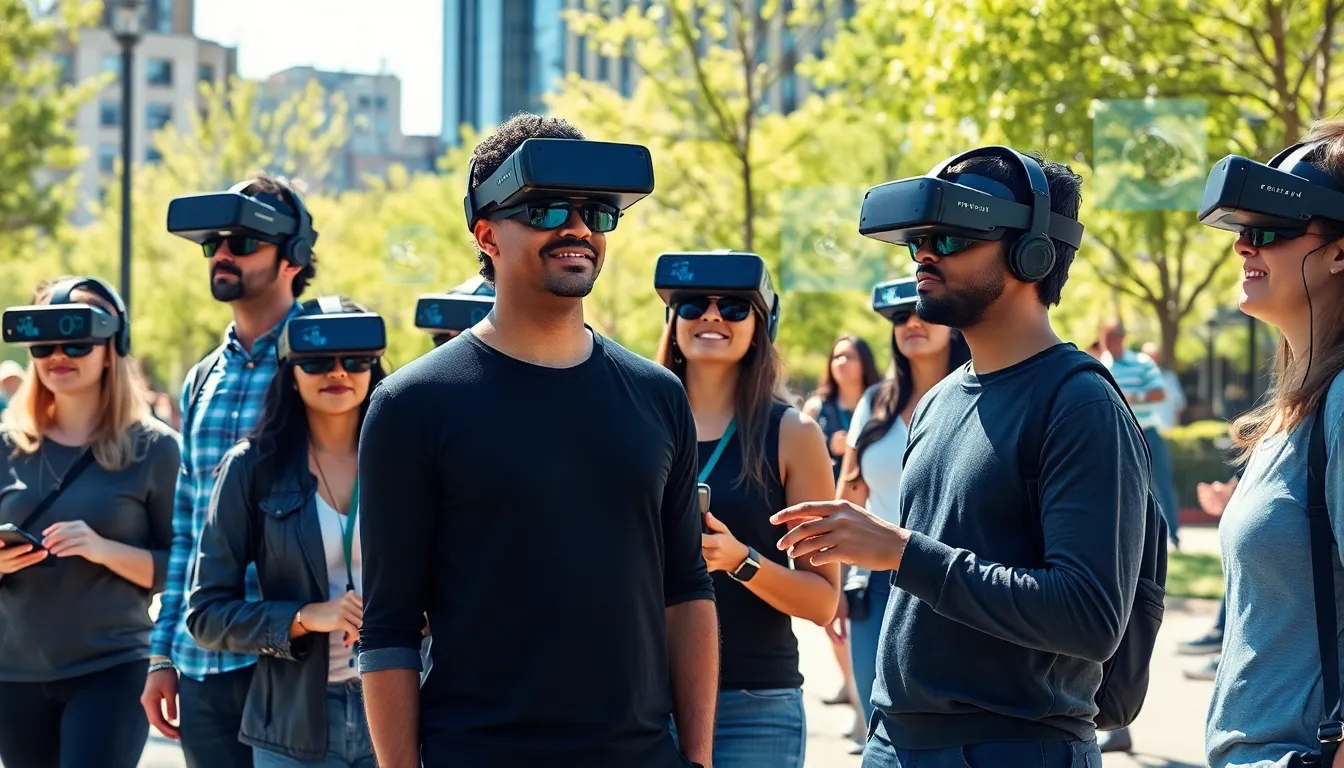
Augmented virtual reality relies on various technologies that enhance user interaction with digital elements integrated into the real world.
Hardware Components
Key hardware components include head-mounted displays, cameras, and sensors. Head-mounted displays deliver immersive visual experiences, allowing users to see digital overlays seamlessly integrated with their surroundings. Cameras capture real-world images, enabling the system to analyze the environment and place virtual elements accurately. Sensors help track user movements, providing an intuitive interaction between physical and digital components. Furthermore, smartphones enable AVR experiences by furnishing the necessary processing power and connectivity, making advanced capabilities accessible to a wider audience.
Software Innovations
Innovative software frameworks drive the development of augmented virtual reality applications. These software platforms utilize computer vision techniques to recognize and interpret real-world environments. They also integrate artificial intelligence to enhance user interactions continuously. This allows developers to create engaging experiences tailored to specific contexts, such as gaming or education. Cloud computing supports data storage and processing, facilitating real-time updates and collaboration among users. Collaboration tools within software ecosystems promote community engagement, allowing users to share their experiences and enhance their adventures while exploring augmented realities.
Applications of Augmented Virtual Reality
Augmented virtual reality (AVR) has a wide range of applications that enhance user experiences across different fields.
Gaming and Entertainment
AVR transforms gaming experiences by blending digital elements with real-world environments. Players interact with characters that emerge from their surroundings, making gameplay more engaging. Communities connect through mobile applications, allowing users to embark on treasure hunts while exploring their neighborhoods. Innovative games not only entertain but also foster social interactions, enhancing the overall gaming appeal. Statistics show that the AVR gaming market continues to expand rapidly, attracting both developers and players alike.
Education and Training
In educational settings, AVR offers students the chance to explore historical events or intricate scientific concepts. Experiential learning becomes possible as learners engage with virtual reconstructions of historical sites or intricate biological processes. This technology encourages collaboration among students, facilitating group projects and discussions within immersive environments. Research indicates that students demonstrate improved retention of information when using AVR tools, making them valuable assets in modern education.
Healthcare
Healthcare professionals utilize AVR for enhanced visualization during medical procedures. Surgeons can overlay critical patient data onto their field of view, improving decision-making and accuracy during operations. Training simulations allow medical students to practice techniques in a risk-free environment, promoting confidence and skill development. Statistics reflect that AVR applications in healthcare lead to faster learning curves and better preparedness for real-world scenarios.
Real Estate and Architecture
Real estate agents and architects leverage AVR to showcase properties and designs. Clients visualize homes through virtual tours, helping them make informed purchasing decisions. Designers present architectural plans by superimposing models onto physical sites, providing a clear understanding of how structures will integrate with their surroundings. Market research reveals that properties marketed with AVR features attract more potential buyers, proving beneficial for sales strategies.
Challenges and Future of Augmented Virtual Reality
Challenges face the growth of augmented virtual reality (AVR) as developers strive to enhance user experiences. High costs of advanced hardware remain a barrier for widespread adoption. Users often require cutting-edge head-mounted displays and sophisticated sensors for optimal interaction, which increases expenses for both consumers and businesses.
Limited standardization across platforms complicates development efforts. Fragmented ecosystems can hinder compatibility and create development challenges, impacting the creation of seamless experiences. Developers must address these inconsistencies to foster a unified AVR environment.
User fatigue also presents a significant issue. Extended use of AVR applications can lead to discomfort or eye strain, affecting overall user satisfaction. Addressing ergonomic design and fostering user-friendly interfaces are essential for retaining users.
Data privacy concerns grow as AVR applications collect sensitive information. Responsible handling of personal data is critical to maintaining user trust. As augmented reality evolves, guaranteeing robust security measures will strengthen user confidence.
Despite these challenges, the future of AVR appears promising. Emerging technologies like 5G networks enable faster data transfer and better connectivity. Improved processing power in devices can support more complex applications, boosting engagement.
Industries are expected to invest heavily in AVR solutions. The market could exceed $50 billion by 2024, driven by rising demand in education, healthcare, and entertainment. Enhanced access to more affordable technologies might further democratize AVR, allowing broader user engagement.
Innovations in artificial intelligence and machine learning promise more personalized experiences. These advancements may refine user interactions and tailor content to individual preferences. With continuous development, the boundaries between the physical and virtual worlds will likely blur, transforming everyday life with engaging and immersive experiences.
Augmented virtual reality is set to revolutionize the way individuals interact with their environment. As it continues to evolve and integrate into various sectors like education and healthcare, its potential to enhance daily experiences becomes increasingly apparent. The blend of digital and physical worlds not only enriches user engagement but also opens doors to innovative applications that improve learning and decision-making.
While challenges like high costs and data privacy concerns persist, the advancements in technology promise a bright future for AVR. With the rise of 5G and smarter devices, users can expect even more immersive and personalized experiences. The journey of AVR is just beginning, and its impact on society is bound to be profound.